
Web + Wins #22: Stop Writing for the Expert. Write for the Person Who Needs Help.
This Week's Update
Part of me still misses the start of a new school year.
You may not know this, but my first career was in education. I taught high school for seven years in Virginia and Arizona (and almost South Carolina before burnout changed that plan — story for another day). There's something about back-to-school season that still gets me. I love a fresh start.
It also got me thinking about how much intentionality I used to put into those first few days of school. While colleagues were reading the syllabus on day one and assigning problems from the textbook, I was doing something different. I'd spend the first several days focused entirely on relationship building, setting expectations, and helping students get to know each other and get to know me.
I used to get some push back from being a few days "behind" on the curriculum, but I knew I was way ahead where it actually mattered. I carried a lot of that from a methodology called Kagan Cooperative Learning, which my mentor teacher introduced me to my first year, and it shaped how I approached everything. The classrooms that took the longest to warm up at the start were always the ones that went the furthest by the end of the year.
I think about this a lot when it comes to how I run Snaply Sites now. My discovery calls aren't really about websites — they're about getting to know your business. What's going on? What are your short and long-term goals? What's working, what's not? The website is just one piece of a bigger picture. From there we set expectations, talk through the process, and figure out if I'm even the right fit — or if I should point you somewhere else. Once we start working together, the systems and communication we set up at the beginning are what make the whole thing run smoothly. The front-loaded work always pays off down the road. Same lesson, different classroom.
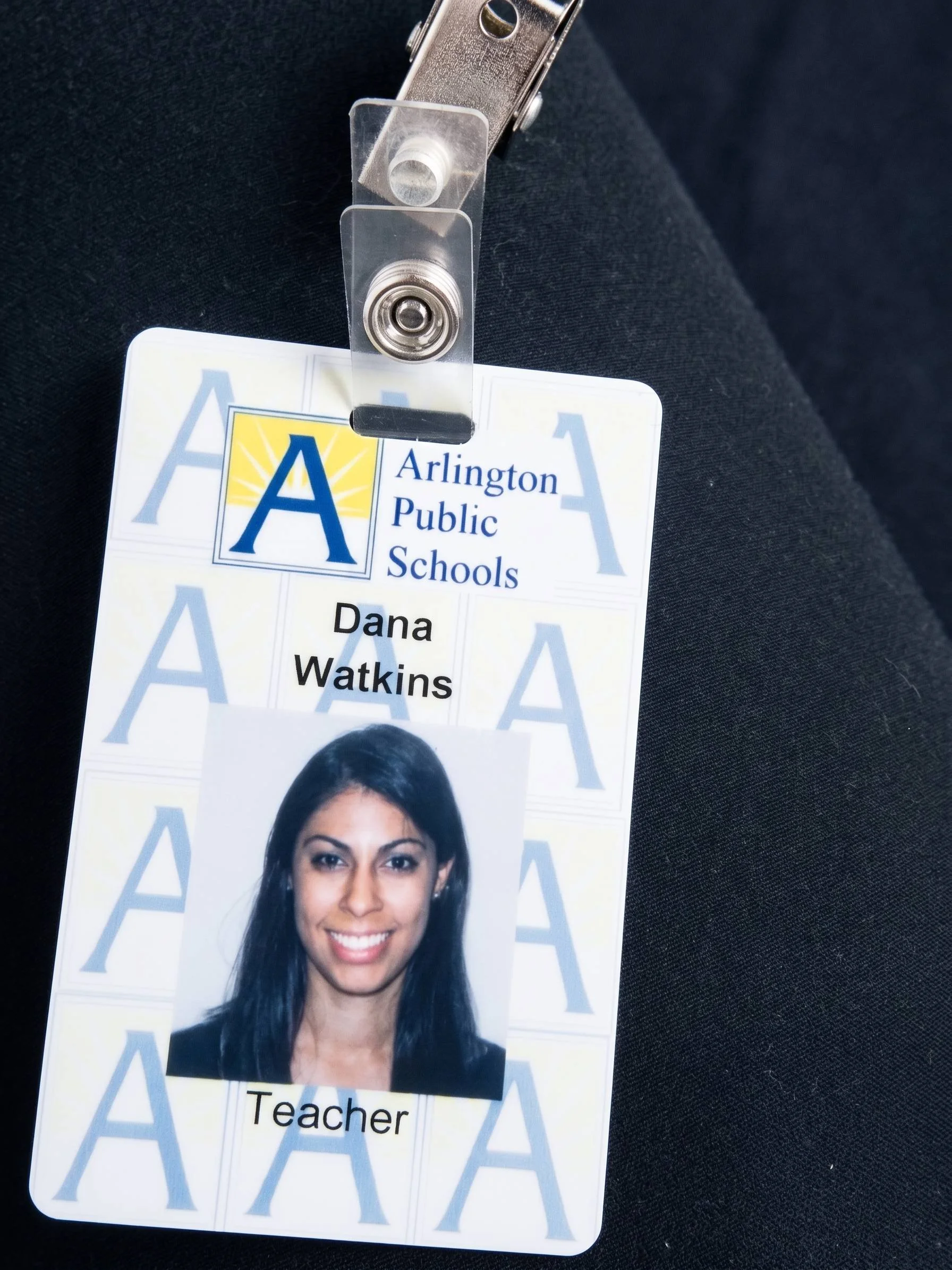
P.S. — Here’s my first official teaching ID from Arlington, VA back in 2014.
Get a Web Win: Stop Writing for the Expert. Write for the Person Who Needs Help.
This feels like a fitting week to walk through a past client in education — North Star Academics, an educational therapy practice that supports students with learning and neurodevelopmental differences like ADHD, executive functioning challenges, and school anxiety, along with the families navigating it all.
Their website had a problem I see often. It had grown one page at a time over the years — a new service here, a new offering there — until it became a maze. The structure was confusing, and the copy was written in the language of the field: educational therapy, executive functioning coaching, classroom observations, customized learning plans. Thorough and accurate — but written for someone who already understood the terminology, not for the person actually landing on the page.
And that person? Almost always a parent. A stressed, short-on-time parent whose bright kid is falling behind, sitting up at 11pm Googling for help. They don't know the difference between "educational therapy" and "executive functioning coaching." They just know something's wrong and they need to know two things: do you get what we're going through, and can you actually help?
When you know your work inside and out, it's natural to want to explain all of it. That's exactly where a lot of great websites get heavy.
So instead of asking "what services do we offer?" we rebuilt the site around "who's landing here, and what do they need in the first ten seconds?"
Here's what we changed:
Led with the parent's own words. The homepage now opens with questions like "Does your child feel overwhelmed by schoolwork despite being bright?" — not a list of service names.
Mapped every pain point to the right service. Parents find help by how they feel, not by knowing the clinical terms. The terminology still lives on the site — just one layer deeper.
Kept every service page and its SEO intact. We didn't delete anything, we reorganized. All that search equity stayed put.
Simplified a complex process into four clear steps. Same rigor, far less overwhelm for someone who's already overwhelmed.
Made "book a consult" the obvious next move on every screen — because that's where the real conversation starts.
The result is a site that finally matches the quality of North Star's work — warm, clear, and welcoming from the first click, without losing any of the expertise underneath.
Your takeaway: When your visitor is stressed and short on time, more information works against you. The instinct to explain everything is a generous one — but a website's job isn't to cover every detail of what you do. It's to make the right person feel understood and show them one clear next step. Organize around what your customer is feeling, not around your internal list of services and expertise.
Convo Corner: Lindsey Cannon
Lindsey is an educator, consultant, and friend who runs Reify Educates.
Reify Educates works with school leadership teams to align instruction, initiatives, and decision-making so that student success stops depending on which classroom a student happens to walk into.
If you're in education leadership or know someone who is, Lindsey is worth a follow. She also loves meeting new people! Grab some time to chat with her 1-on-1 here.
Reify Educates: https://www.reifycopywriting.com/reify-educates
Let's Talk
Talking about career pivots has me curious — what was your "first act?" Not many of us took a straight line to get where we are today, and I genuinely love hearing people's backstories. Get in touch and let me know. 😊
And if your website is speaking to the wrong person — or just not speaking clearly to the right one — let's fix that. Get in touch with me here.
